Home » What to Tell Your Kids About Drugs
If you want your children to come to you with their questions about drugs, you need to educate yourself about drugs and drug policy from credible and reputable sources. An excellent book to learn more about drugs and drug policy is “Drugs Without the Hot Air, Minimising the Harms of Legal and Illegal Drugs” by David Nutt. He suggests that parents start to talk to their children about drugs as early as six or seven, because they are exposed to persons using tobacco or alcohol either in their lives or in the media.
Our children are being offered and exposed to drugs at earlier ages. It is important to have more detailed talks in a safe space without judgment with your children before any experimentation begins; to be safe this likely means in middle school (Grade 6 or 7).
Alcohol and the nicotine in tobacco are legal drugs. Alcohol is the most harmful drug of all when harm to self and harm to others is considered. Fifty percent of people who smoke tobacco will die from a smoking related illness. Both alcohol and tobacco can cause cancer after prolonged use. These drugs are legal, but using them can cause significant physical and social harms.
The Canadian Government legalized cannabis not because it is harmless but in order to minimize the harms associated with cannabis use by regulating the production, distribution, and sale of cannabis. This allows consumers to know exactly what they are using and in what quantities.
Experts in drug policy are advocating for a legally regulated supply of all drugs because the illegal drug supply is unpredictable and contaminated with toxic additives. There has been a sharp increase in street-based fentanyl and carfentanil found in the illegal drug supply, increasing the risk of overdose and drug toxicity death.
Drugs that are available only by prescription are generally safe when used by the person to whom they are prescribed, as directed by the prescribing physician and under the continued supervision of that physician. You should not take a drug that has been prescribed to someone else. For example, the strength of a prescribed drug is often based on a person’s weight, or on that person’s tolerance level for that drug which may have built up over time.
People you know at school, even friends, may sell prescription drugs that are fake and could contain other drugs, such as fentanyl or benzodiazepines that could result in accidental overdose-related death.
Opioids are commonly used for pain management, like after a surgery or where someone is terminally ill with cancer. Legal opioids include morphine, oxycodone (Oxyneo or Percocet), hydromorphone (Dilaudid), fentanyl, methadone, and codeine. Illegal opioids include heroin and fentanyl. With continued use the human body can become dependent on opioids. The dependency on opioids can continue to increase until not having opioids in the body causes withdrawal symptoms and sickness.
North America is amid a drug toxicity crisis. Illegal drugs purchased on the street often contain other drugs that can be more harmful or even fatal, like fentanyl or carfentanil. Fentanyl is a synthetic opiate that is 50 – 100 times more powerful than heroin. Carfentanil is a synthetic opiate that is approved for use only in veterinary medicine as a tranquilizing agent. Fentanyl and carfentanil are being found in other illegal drugs, including stimulants like cocaine and methamphetamines. People may think that they are buying a stimulant drug, but it could be contaminated with fentanyl.. This is often due to cross contamination when drug dealers do not wipe the surfaces and equipment that was used for fentanyl.
Drug dealers who make and sell fake prescription pills do not know how much fentanyl goes into each pill. There is no guarantee that the drug you are buying is the drug that the dealer claims it to be. Some of the illegal drugs being sold on the street closely resemble prescription drugs, like Xanax or Oxycodone, but they are fake. Many drugs sold as opioids contain benzodiazepines, which increase the chances of drug toxicity death because both opioids and benzodiazepines suppress breathing and naloxone (the medicine that reverses an opioid overdose) does not reverse a benzodiazepine overdose.
Even occasional users of drugs are dying from the toxic supply of illegal drugs. They think they are using one drug, like cocaine, but it turns out it is contaminated with other drugs like fentanyl, or xylazine. Due to the unregulated illegal drug supply, it is impossible to know precisely what is in your drug or the amount you are using. Anytime you take a drug that you purchased on the street or were given by a friend, you are at risk of overdose or accidental overdose-related death, whether you are an occasional or regular drug user.
Substance use disorder (SUD) is a mental health condition that usually develops during adolescence. If you start to use alcohol or other drugs before age 15 you are 6½ times as likely to develop an SUD. It is estimated that up to 90% of SUDs develop during adolescence. This means that the longer that you delay drug use, the less likely you are to develop an SUD. Wait as long as you can before you start to experiment with alcohol or other drugs.
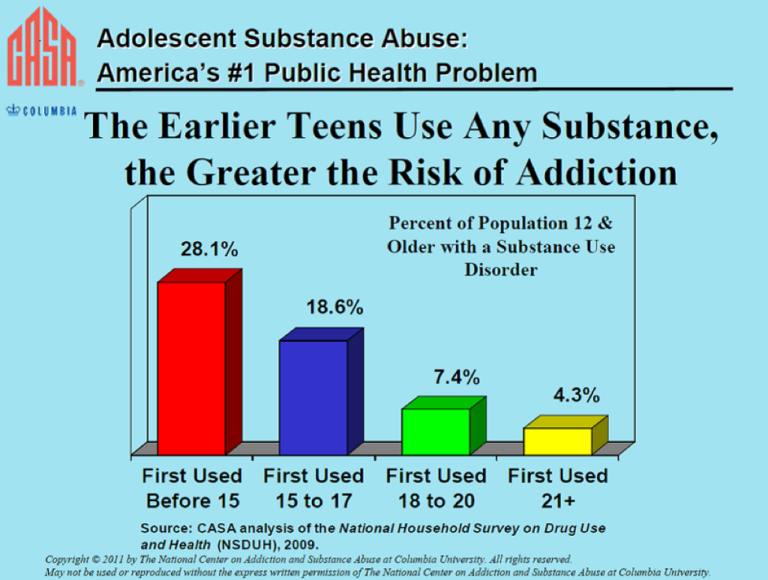
The vast majority of people who use drugs (legal, illegal or prescribed) will not become addicted to them or develop other mental health disorders because of their drug use. About 21% of the Canadian population (6 million people) will meet the criteria for addiction in their lifetime. (CMHA Ontario)
People with a family history of SUD or other mental health conditions are at a greater risk of developing these conditions if they use drugs. Know whether your family history puts you at greater risk.
People use drugs for many different reasons and often just to have fun. If you are using drugs because you are bored, anxious, or to dull emotional pain, then you are at a greater risk of developing an addiction. Check in with yourself from time to time and ask yourself why you are using drugs. If you are using for these reasons, then the next point is all the more important.
No one ever starts using drugs with the intention of becoming addicted to them. It can happen over time and often before the person realizes it. Keep track of how often and how much you are using and know that most people underestimate how much they use. While no one recommends that adolescents use drugs, Canada’s Guidance on Alcohol and Health and Canada’s Lower-Risk Cannabis Use Guidelines (LRCUG) for youth can give you some context. Watch for cravings and continued use even when you think you should stop. These are warning signs.
If you want to give up activities you previously enjoyed, if your schoolwork is slipping, if you find yourself thinking about drugs often, these are signs that you should reach out for help from a trusted adult, such as your parents, teacher, family doctor, or pharmacist. There is no shame in asking for help any more than if you were sick with any other illness. It can be difficult and scary to ask for help because of the stigma associated with substance use. People may avoid getting help because they are afraid of judgment from the people who matter to them, getting in trouble at work, or even the law. Research shows that there is benefit to reaching out for help as soon as you realize that substance use is causing you harm.
If you plan on using drugs it is important to research their effects from reliable sources like the National Institute on Drug Abuse or the Alcohol and Drug Foundation. Researching drug policy will give you a better idea of the additional risks of using drugs that are not regulated by the government.
Synthetic cannabinoids (Spice, K2, AK-47, Scooby Snax, Kush) are far more dangerous than cannabis.
People tend to use synthetic cannabinoids instead of cannabis because they believe that they are legal and that there is no risk of a criminal record, or to avoid a positive drug test. However, synthetic cannabinoids are illegal in Canada. The risks associated with synthetic cannabinoids are significantly greater than the risks associated with cannabis use and include seizures, irregular heartbeat, panic attacks, agitation, hallucinations and, in a few cases, death. If you are going to use one or the other, use cannabis. For more information on synthetic cannabinoids click here.
Inhalation, swallowing, and snorting are less dangerous ways to use drugs compared to intravenous drug use. There are very serious health complications associated with injection drug use, including:
Solvents are legal, everyday liquids or gases like glue, paint, butane, gas and aerosols. Young people may be tempted to inhale or huff these substances to get high because they are easily accessible compared to regulated substances like alcohol. The dangers of use are summarized by David Nutt in Drugs Without the Hot Air:
“Solvent users can asphyxiate if they pass out while sedated and choke on their own vomit or if they don’t remove the cloth or bag from their face and continue to inhale the drug while they’re unconscious. Long-term use can also cause brain damage, harm the liver and kidneys, and lead to hearing loss and convulsions or limb spasms. But the main danger is sudden sniffing death syndrome (SSDS), when a single session results in irregular heartbeat, heart failure and death. Over half of all deaths from solvents are from SSDS, and a fifth of those who died had no history of abusing inhalants. This makes it an extremely dangerous sort of drug to experiment with, even once or twice.” (p. 315-316)
Only use one drug at a time and remember that alcohol is a drug. Do not mix one type of alcohol with different types of alcohol (i.e., beer with liquor). The average overdose involves 2.7 drugs. It is particularly dangerous to mix drugs that suppress the central nervous system like alcohol, benzodiazepines (eg. Xanax, Valium, Ativan, Klonopin) and opiates (eg. OxyContin, Percocet, Dilaudid). These drugs slow down breathing, potentially causing unconsciousness and death. People experiencing an opioid overdose may have slow, shallow, or erratic breathing, or no breathing at all.
Never use alcohol or other drugs alone. If you use too much of a substance you can lose consciousness. While unconscious you may vomit and choke on your vomit. You may also stop breathing. If you are alone, no one can save you. If you do use alone, first call The National Overdose Response Service (NORS) at 1-888-688- 6677 from anywhere in Canada. A peer will stay on the line while you use and call 911 and send emergency responders to your location if you cannot respond. It is a confidential service and you do not need to provide personal information.
Making sure that you use drugs with others will not help if everyone present uses the same drug. If the drug is more potent than expected or laced with other drugs, everyone may become unconscious at the same time and no one will be able to call 911 or administer naloxone (see below). If everyone will be using substances, take turns using. Otherwise, someone at the party should be a sober designated observer, just like having a designated driver.
When you use illegal drugs, you can never be sure that you are getting the drug that you think you are getting. Even if you do get the drug you expect, you cannot be sure of the strength. Take a small amount to see how you react before consuming the entire dose.
Everyone should know the signs of an opioid overdose. It is a sad truth that one of the most common mistakes that people make is that they assume someone is just sleeping off their drug use when in fact they are experiencing an overdose.
The video SAVE ME Steps to Respond to an Opioid Overdose explains how to recognize and respond to an opioid overdose with intramuscular (injectable) or nasal naloxone (also known as Narcan). Naloxone can temporarily reverse an opioid overdose. If you are unsure if someone is experiencing an opioid overdose, administer naloxone anyways. Naloxone does not cause harm and there are no known allergies to naloxone.
Always call 911. Sometimes people are afraid to call 911 because they think they will be charged with drug possession. Police departments are increasingly adopting policies to not respond in overdose situations unless there is an issue of safety. Further, Canada has passed the Good Samaritan Drug Overdose Act which applies to anyone seeking emergency support during an overdose situation. The Good Samaritan Law can protect persons from being charged for possession of a controlled substance and certain related offences in these situations.
You can find naloxone kits anywhere in Canada at this website.
In every overdose situation, if the unconscious person is still breathing, they should be put in the recovery position (on their side with a knee up to keep them on their side) to ensure they do not choke if they vomit. If you must leave the person, ensure they are in the recovery position.
Alcohol poisoning (an overdose of alcohol) affects your breathing, heart rate, body temperature, and can be life threatening. While naloxone will not help for alcohol poisoning, if there is any chance the unconscious person has taken any drugs, knowingly or not, naloxone should be given. People experiencing alcohol poisoning require immediate medical attention. Call 911 if someone you know has blacked out from alcohol or has alcohol poisoning. Sometimes they will not wake up without treatment.
In every overdose situation, if the unconscious person is still breathing, they should be put in the recovery position (on their side with a knee up to keep them on their side) to ensure they do not choke if they vomit. If you must leave the person, ensure they are in the recovery position.
A stimulant overdose (overamping) is different from opioid and alcohol overdose because the person often does not lose consciousness. Signs include dangerous overheating, rapid breathing and heart rate, high blood pressure, chest pain, nausea, anxiety, irritability, hallucinations and psychosis. Consult the CDC Stimulant Guide on how to respond and when to call 911.
In every overdose situation, if the person is unconscious and still breathing, they should be put in the recovery position (on their side with a knee up to keep them on their side) to ensure they do not choke if they vomit. If you must leave the person, ensure they are in the recovery position.
Your ability to drive can be affected by legal, illegal or prescription drugs. If you are going to use substances, don’t drive. Also don’t drive with someone else who has been using substances. It is a myth that cannabis does not adversely affect a person’s ability to drive. Driving within a couple of hours of using cannabis nearly doubles your crash risk. Make sure your kids know they can call you at any time to get home safely.
Mandatory Alcohol Screening allows police to demand a breath sample from any driver they have lawfully stopped. Also, if police have reasonable grounds to believe that a driver has cannabis or other drugs in their body, they can demand that the driver provide an oral fluid (saliva) sample. More information on cannabis and driving can be found on the MADD Canada website.
Here are some tips for safer partying:
Your donation helps us support families affected by addiction and those struggling with their substance use.
Please join us and sign up for our e-bulletins to get up-to-date information and to lend weight to our voice.