What is Addiction?

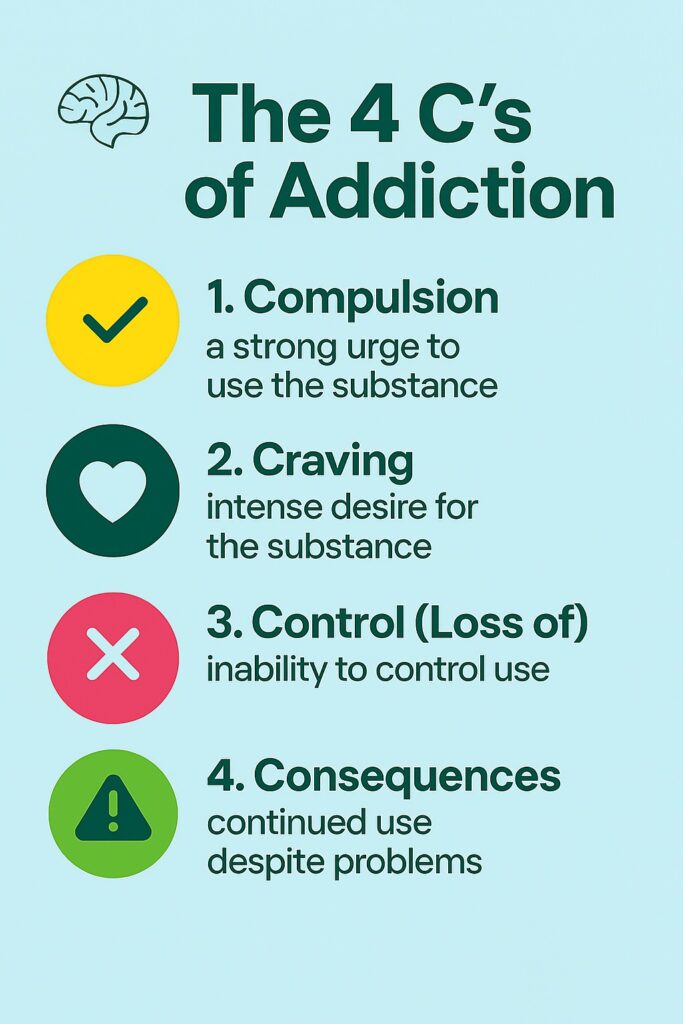
The Four C's of Addiction

Addiction isn’t just about liking something a lot—it’s when a person loses control over their use of a substance or behavior, even when it causes problems. Experts use the 4 C’s to help explain what addiction looks like:

  • Compulsion
    • This means feeling a strong urge or need to use the substance (like drugs or alcohol).
    • It’s not just a want—it feels like you have to do it, even if you don’t really want to.


  • Craving
    • Craving is the intense desire for the substance.
    • It can take over your thoughts and make it hard to focus on anything else.
    • People might feel anxious, restless, or even physically uncomfortable when they crave something.


  • Control (Loss of)
    • Someone with an addiction often can’t control how much or how often they use.
    • Even if they try to stop or cut back, they might find it really hard or impossible.


  • Consequences
    • Addiction continues even when it causes serious problems—like health issues, trouble at school, or problems with friends and family.
    • The person keeps using despite knowing it’s hurting themself or others.

Together, these 4 C’s help determine when someone’s use of a substance has become an addiction – not just a habit or a bad choice.

Addiction is a brain disease because drugs change how a brain works, especially the brain’s natural inhibition and reward centres. Addiction is a treatable illness.

Explaining Addiction

Addiction, Visualized

Medical Definition of Addiction

From a medical perspective, addiction is the severe form of substance use disorder (SUD). SUD is on a spectrum. Clinicians specify how severe SUD is depending on how many of the following symptoms are identified in a 12-month period: 2-3 mild; 4-5 moderate; 6 or more indicates an addiction:

  • The substance is often taken in larger amounts or over a longer period than was intended.
  • There is a persistent desire or unsuccessful effort to cut down or control use of the substance.
  • A great deal of time is spent in activities necessary to obtain the substance, use the substance, or recover from its effects.
  • Craving, or a strong desire or urge to use the substance.
  • Recurrent use of the substance resulting in a failure to fulfill major role obligations at work, school, or home.
  • Continued use of the substance despite having persistent or recurrent social or interpersonal problems caused or exacerbated by the effects of its use.
  • Important social, occupational, or recreational activities are given up or reduced because of use of the substance.
  • Recurrent use of the substance in situations in which it is physically hazardous.
  • Use of the substance is continued despite knowledge of having a persistent or recurrent physical or psychological problem that is likely to have been caused or exacerbated by the substance.


Tolerance, as defined by either of the following:

  • A need for markedly increased amounts of the substance to achieve intoxication or desired effect.
  • A markedly diminished effect with continued use of the same amount of the substance.


Withdrawal, as manifested by either of the following:

  • The characteristic withdrawal syndrome for that substance.
  • The substance (or a closely related substance) is taken to relieve or avoid withdrawal symptoms.

Donate

Your donation helps us support families affected by addiction and those struggling with their substance use.

Get Involved

Please join us and sign up for our e-bulletins to get up-to-date information and to lend weight to our voice.