Home » Our Positions
Addiction is a pediatric illness. Ninety percent of the time it originates or is triggered by use before the age of 21. Addiction must be approached as an illness that affects our youth. Society has an obligation to protect youth from addiction (prevention) and protect youth with addiction (harm reduction and treatment). People with addiction often have other mental health conditions (called concurrent disorders). This complicates treatment and recovery.
Addiction is not an acute illness where you get treatment and you are cured. Like other chronic illnesses, people in recovery need ongoing health care and community supports to help them remain in recovery. We must build these supports. These include recovery high schools, sober dorms, housing, employment and a continuum of care.
One family member may struggle with addiction, but the whole family suffers. Family involvement and support is important during active addiction, treatment and recovery. Outcomes are best when people with addiction and their families learn coping skills and recover together. Families should be involved in the development of a treatment plan for our loved ones. People with addiction and their families should also be involved in the development of drug policies, health laws and the development of best practices, standards of care and guidelines for harm reduction and treatment.
We must also develop best practices with respect to privacy laws as they relate to those with addiction and other mental health conditions. Family caregivers have an important role to play in supporting their loved ones.
Stigma results in the chronic underfunding of treatment for addiction and other mental health conditions and a poor quality of care for those affected and their families.
Addiction, like other chronic illnesses, requires a public health approach, not a criminal justice approach. This means shifting the focus of our limited resources from enforcement to education, prevention, harm reduction and treatment. Those involved in low level crimes to fund their addiction should not be criminalized but treated and supported. Significantly more resources should be used to reduce the demand for drugs (through education, prevention, harm reduction and treatment) than are used to reduce the supply of drugs (the “war on drugs”).
To date, education campaigns have focused on the dangers of drugs. That has not worked. We need to focus education so that we can have thoughtful conversations about:
Individual
The major risk factors for addiction include a genetic predisposition, male gender, early initiation of use, other mental health conditions, certain personality traits, and environmental factors such as adverse childhood experiences (trauma), neglect or abuse. Prevention efforts should include:
Population
A public health approach to substance use means adopting regulatory measures that apply to everyone in order to reduce the overall harm of substance use across the population. We believe these measures should include:
Harm reduction services keep people alive so they can recover. Harm reduction is a means to an end. The end is recovery. There should be no age restriction to access supervised consumption sites (SCSs) and preferably SCSs just for youth. Because Canada does not have treatment on demand and does not allow for involuntary treatment, SCSs are one way to protect our teenagers who are waiting for, or not seeking, treatment.
It has been estimated that 80-90% of people with addiction do not receive treatment. We must eliminate barriers so that treatment is accessible, publicly-funded, timely, compassionate and evidence-based. Treatment meeting all these criteria is rarely available today. Those in detention or incarcerated who have addiction or other mental health conditions must receive the treatment they need.
Best practices must be developed to protect teenagers and adults with addiction who are waiting for treatment or not seeking treatment. It is not enough to say early intervention is key — we must actually intervene.
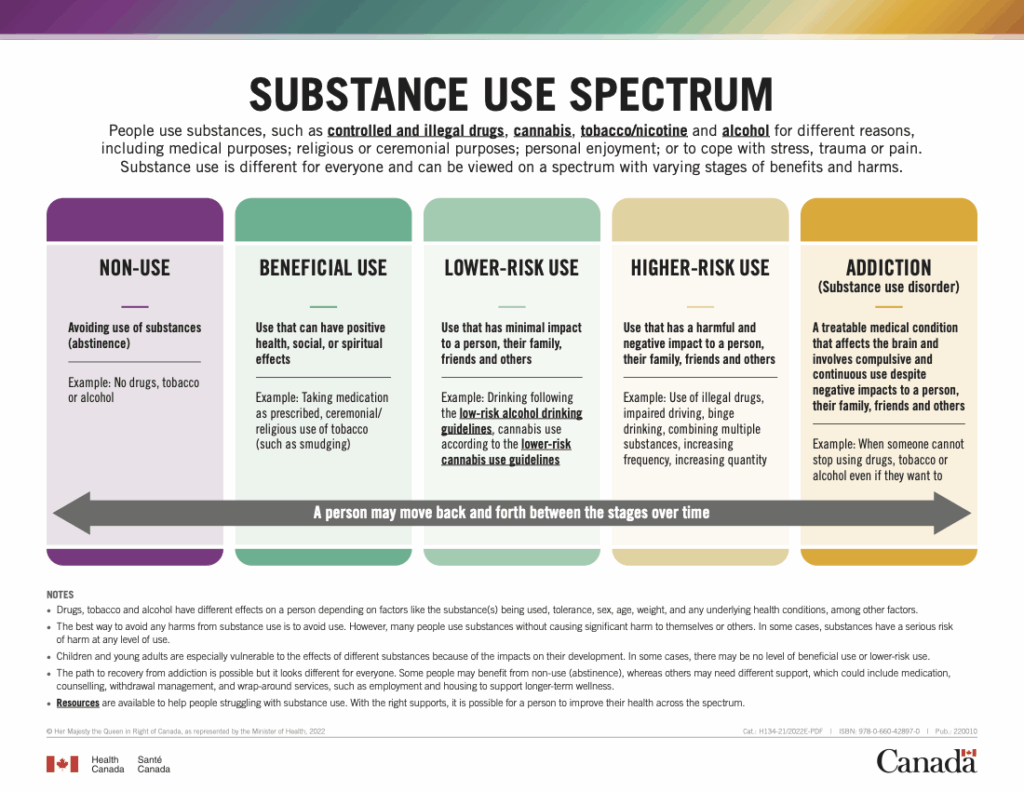
The majority of people who use alcohol and other drugs (whether legal, illegal or prescribed) do not have an addiction. They are not a threat to themselves or others. Giving them a criminal record is counter-productive, unjustifiable and a waste of public funds.
People with an addiction are ill and should not be criminalized for compulsive drug use. Criminalization harms recovery. Addiction requires a public health response not a criminal justice response. People should have access to harm reduction services, evidence-based treatment on demand and social supports.
Families for Addiction Recovery (FAR) endorsed the Brief on the Opioid Epidemic and Toxic Drug Crisis submitted by the Canadian Society of Addiction Medicine (CSAM) to the Health/Sante (HESA) Committee. FAR also submitted our own Brief with additional recommendations.
FAR supports the need for compassionate intervention as part of the continuum of care for those with addiction and/or other mental health conditions. For more information, see the Involuntary Treatment section of this website.
Many Canadians use illegal drugs despite the fact that they are illegal. According to the Canadian Substance Use Survey (2023), 8% of Canadians aged 15 years or older reported using illegal substances in the previous year. Almost twice as many youth and young adults (those aged 15-24 years) reported illegal drug use in the previous year (14%).
Decriminalization means possession of a drug for personal use is not subject to criminal sanctions, but it is still illegal to sell the drug. FAR supports the call of the Canadian Society of Addiction Medicine (CSAM) to decriminalize the possession of drugs for personal use, which has been endorsed by the Canadian Medical Association and the Canadian Association of Emergency Physicians.
In Canada, alcohol is the drug that causes the greatest amount of harm and has the greatest cost to society of all substances. It is also the only substance where harm to others exceeds harm to self. For more information see the Drug Facts and Myths section of this website. Much more can be done to take a public health approach to alcohol.
The federal government and each province/territory in Canada must have an Alcohol Strategy to minimize the harms of alcohol and implement those strategies. FAR is part of a Coalition that is advocating for an alcohol strategy for Ontario. To learn more, visit the Alcohol and Health Website and review our Evidence Brief. On that website you may also join our campaign by sending a prepared letter directly to your elected officials. There is also a campaign you can join to advocate for alcohol warning labels that alcohol causes cancer. Check in to that website from time to time for new campaigns. Be part of the change needed to protect families from the alcohol industry.
FAR advocated for the legalization of cannabis to reduce both the harms of cannabis and of the illegal marketplace. However, many of the stated goals of legalization have not been achieved and there is evidence of higher prevalence of use among young adults and increased harms among many groups including children, youth and young adults. Legislative Review of the Cannabis Act: Final Report of the Expert Panel is a five-year review commissioned by the federal government of the successes and challenges of the implementation of the Cannabis Act. While use among youth may not have increased, Canada still has one of the highest rates of use by youth in the world. Further, use among young adults increased to 40%. While most adults purchase their cannabis legally, the illegal market continues and little is being done in terms of enforcement. Pediatric admissions to hospital for accidental consumption of cannabis have increased significantly.
When a substance is legalized, use may increase and the perception of harm will decrease unless there are efforts to reduce access and availability, provide ample public education and avoid commercialization. When use increases, harms increase. It is important to take measures to avoid these outcomes. FAR submitted a Brief to the Cannabis Legislative Review Committee outlining our concerns and recommendations based on our research into the perspectives of youth, parents and service providers on cannabis and youth mental health in Canada post legalization. See also the Research section of this website.
In preparation for legalization in 2016, the Government of Canada formed a task force that wrote a report highlighting the risks of cannabis use. To mitigate these risks, the task force recommended a public health approach to “delay the age of initiation, reduce the frequency of use, reduce higher-risk use, reduce problematic use and dependence, expand access to treatment and prevention programs, and ensure early and sustained public education and awareness.” (Health Canada, 2016) Despite these recommendations, the data show that these objectives are not being met. Current policies and service gaps suggest that the implementation of a public health approach envisioned by the task force has been limited, while commercialization appears to be influencing policy and practice.
Cannabis regulation does vary significantly from province to province. For example, in Ontario the legal age for purchase is 19 compared to 21 in Quebec and Ontario has over 1,700 retail outlets most of which are private compared with over 100 outlets in Quebec all run by the government. Much more needs to be done for there to be a true public health approach to cannabis across Canada.
The diagram below illustrates the paradox of prohibition. Harms are minimized when a substance is strictly regulated. Harms are maximized when the market is either unregulated (illegal) or under-regulated (commercialized).
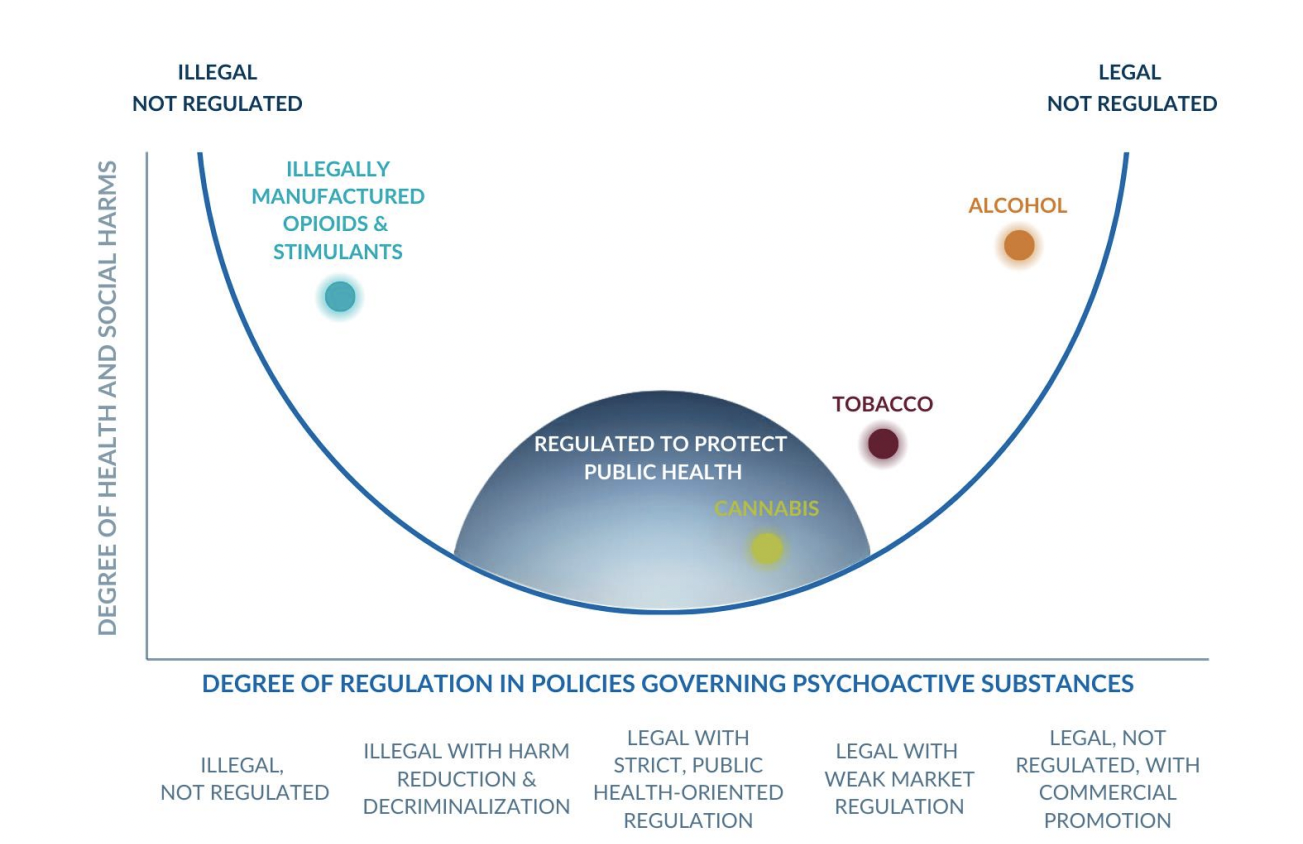
It is widely recognized that the war on drugs has been a costly failure. We regulate alcohol, tobacco and cannabis even though they can be harmful in order to minimize the harms of those substances. Strict regulation of illegal drugs would allow our governments to protect Canadians by:
If our governments don’t control the market, then drug cartels will.
However, are our governments up to the task of implementing a public health approach and strict regulation of these potentially harmful substances? Looking at the evidence to date with respect to legal substances, the answer is no. For this reason, FAR does not currently support the regulation of illegal substances. We will revisit this position once Canada has a public health approach to legal substances as evidenced by:
Your donation helps us support families affected by addiction and those struggling with their substance use.
Please join us and sign up for our e-bulletins to get up-to-date information and to lend weight to our voice.