Home » How Do Drugs Affect the Brain?
Just like we turn down the volume on a radio that is too loud, the brain adjusts to drugs by turning down its ability to receive signals. As a result, the brain’s reward circuit of a person struggling with addiction is abnormally low. They feel flat, lifeless and depressed. They are unable to enjoy things they used to. They need to keep taking drugs so they feel normal — which only makes the problem worse. Because the brain is learning to tolerate the drugs, the person will take larger amounts to produce the same result.
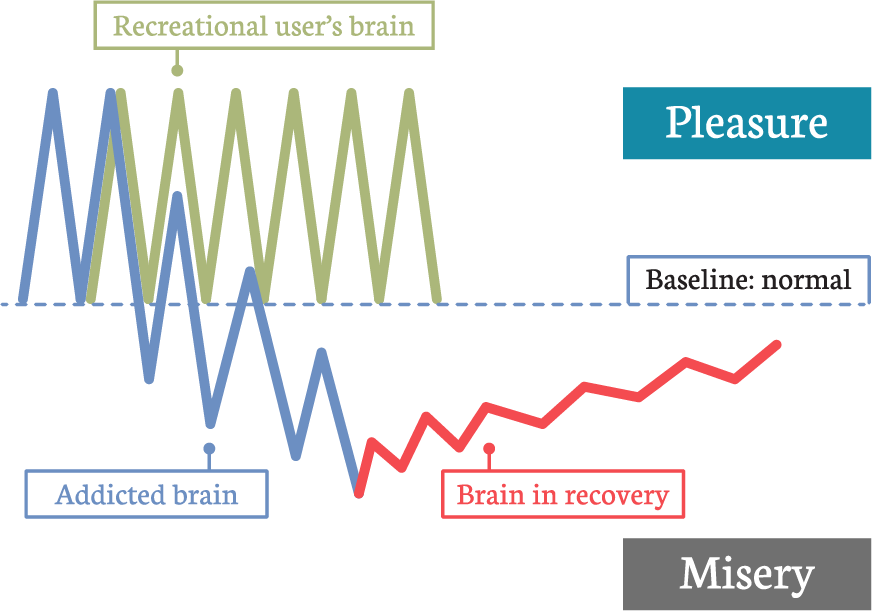
Here is what a brain in recovery looks like:
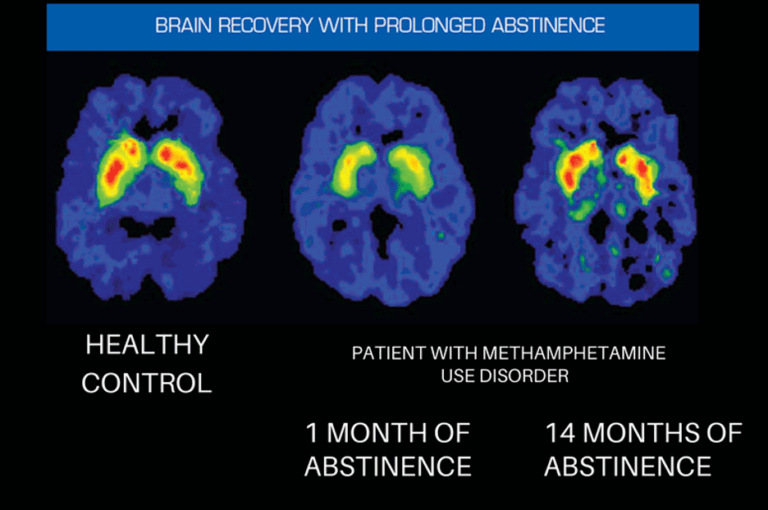
Stopping drug use doesn’t immediately return the brain to normal. Some drugs have toxic effects that can kill neurons-and most of these cells will not be replaced. While changes to connections between neurons in the brain may not be permanent, some last for months. Some research suggests the changes may even last for years.
Long-lasting brain changes can make it challenging for individuals struggling with addiction to stay drug-free. They often experience intense cravings for years, which can lead to a return to substance use. However, the brain has neuroplasticity. That means it can repair itself, over time.
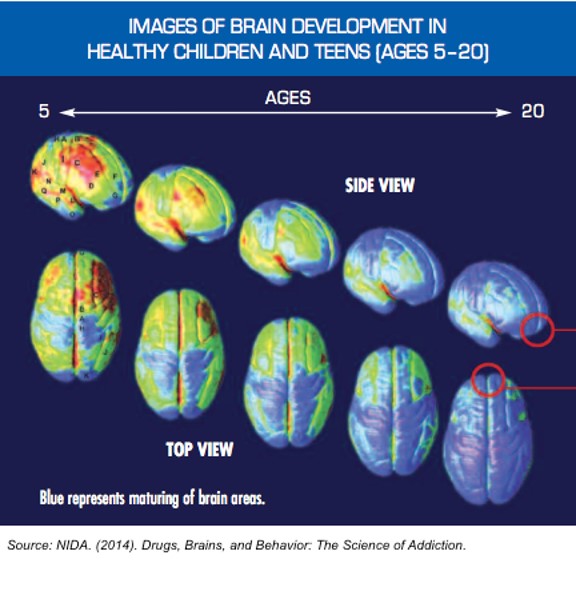
The human brain does not fully mature until the mid-twenties. The limbic system governs feelings of reward and pain. It develops before the pre-frontal cortex which is the last part of the brain to fully develop. The pre-frontal cortex is responsible for executive functions such as insight, judgment, planning and impulse control.
The adolescent brain has been described as all gas and no brakes. An immature brain struggles with balancing self-control and impulse. It is why we have many laws to protect adolescents. For example, they cannot purchase alcohol or cigarettes or enter into binding contracts. Teenagers are risk takers. They pursue pleasure and seek to avoid pain while their ability to anticipate consequences and avoid risks has yet to fully develop.
The adolescent brain is particularly vulnerable to developing a substance use disorder. The brain is wired to engage in activities that release dopamine. Alcohol and drugs flood the brain with dopamine. Severe substance use alters the brain and compromises a person’s ability to say no. This is the case for adults, not just adolescents.
If an adolescent develops a substance use disorder, it can interfere with normal brain maturation. It is important to intervene to avoid potentially lifelong consequences. The good news is that the brain has the ability to heal itself (neuroplasticity) and can heal from severe substance use.
For further information see:
Your donation helps us support families affected by addiction and those struggling with their substance use.
Please join us and sign up for our e-bulletins to get up-to-date information and to lend weight to our voice.