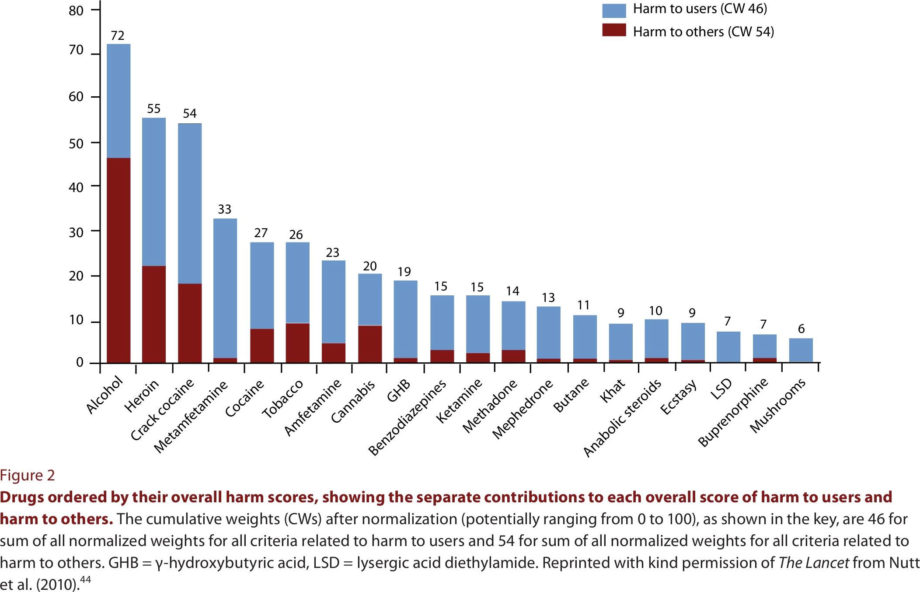
Alcohol is a drug and it is not safer than cannabis. Alcohol has become normalized in our society and according to a study of the relative harms of 20 of the most commonly used drugs, alcohol causes the greatest amount of harm once you combine harm to self and harm to others. Cannabis ranks eighth on the list. Alcohol has now surpassed tobacco as the substance with the greatest cost and harms to Canadians. See Canadian Substance Use Costs and Harms.
North America is in the midst of an toxic drug crisis. It has never been more dangerous to use illegal drugs. Both persons struggling with addiction and recreational users of illegal drugs are at risk. Toxic drugs like fentanyl and carfentanil, both synthetic opioids which are much more powerful than morphine, are being mixed in to other drugs. Persons who use street drugs do not know if what they are purchasing is the drug that they believe it to be or the potency of it.
If you or anyone you know may be using illegal drugs or prescription opioids (oxycodone, morphine, fentanyl), be aware of the signs of an overdose and have a naloxone kit. See the Overdose and Naloxone section of this website. For ways to reduce the harms of using these and other drugs see the What to Tell Your Kids About Drugs section of this website.
The word addiction is derived from the Latin term for “enslaved by” or “bound to”. With respect to substances, addiction as a chronic, relapsing brain disease that is characterized by compulsive drug seeking and use, despite harmful consequences. Addiction occurs when a person cannot control the impulse to use drugs even when there are negative consequences—the defining characteristic of addiction. For more information, see the What is Addiction section of this website to learn about the 4 C's of addiction.
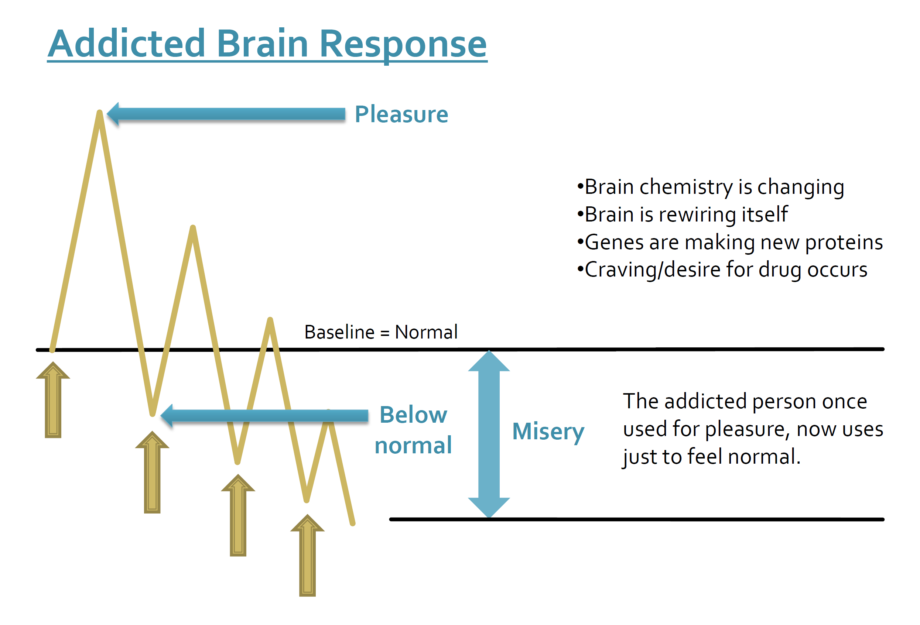
For the brain, the difference between normal rewards and drug rewards can be described as the difference between someone whispering into your ear and someone shouting into a microphone. Just as we turn down the volume on a radio that is too loud, the brain adjusts to the overwhelming surges in dopamine (and other neurotransmitters) by producing less dopamine or by reducing the number of receptors that can receive signals. As a result, dopamine’s impact on the reward circuit of the brain of someone struggling with addiction can become abnormally low, and that person’s ability to experience any pleasure is reduced. This medical condition is called “anhedonia”. It is also present in people with depression.
This is why a person who is struggling with addiction eventually feels flat, lifeless, and depressed, and is unable to enjoy things that were previously pleasurable. The person needs to keep taking drugs in an attempt to bring his or her dopamine function back up to normal so they feel normal – which only makes the problem worse, like a vicious cycle. Also, the person will often need to take larger amounts of the drug to produce the familiar dopamine high – an effect known as tolerance.
Stopping drug use doesn’t immediately return the brain to normal. Some drugs have toxic effects that can kill neurons—and most of these cells will not be replaced. While changes to connections between neurons in the brain may not be permanent, some last for months. Some research suggests the changes may even last for years. This is called post addiction withdrawal syndrome (PAWS).
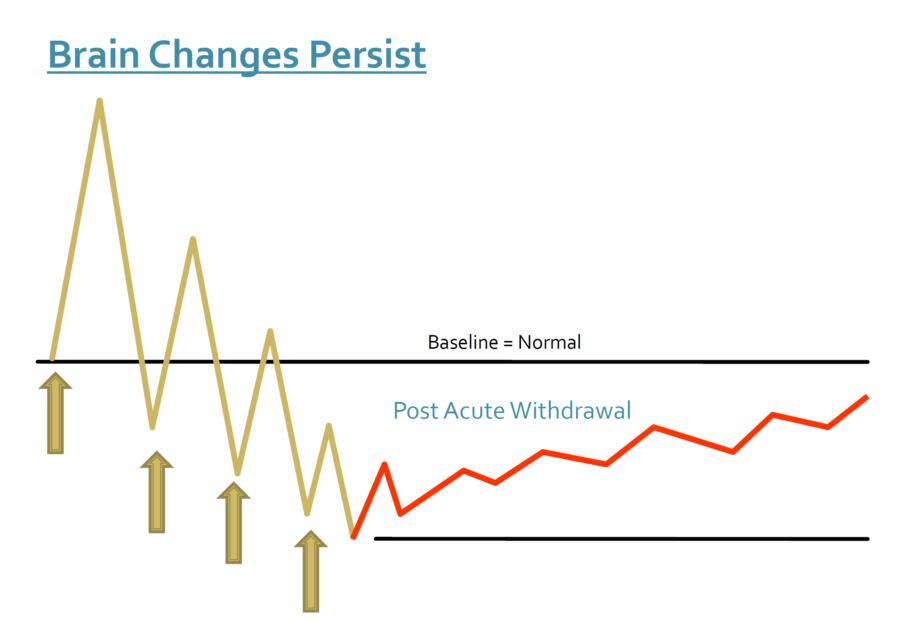
Long-lasting brain changes can make it challenging for individuals struggling with addiction to stay drug-free. They often experience intense cravings for years, which can lead to relapse. However, the brain has neuroplasticity. That means it can repair itself, over time.
It depends on the drug. Here are average periods of withdrawal for various drugs:
| Drug | Withdrawal Period |
|---|---|
| Alcohol | 5-7 days |
| Cannabis | Up to two weeks |
| Cocaine | 2-3 days |
| Opioids | 1-4 weeks |
| Amphetamines/Methamphetamines | 2-10 days |
| Tobacco | 2 days – 2 weeks |
| Benzodiazepines | 10-14 days |