Home » Drug Facts and Myths
A psychoactive drug is a chemical substance that changes brain function and results in alterations in perception, mood, or consciousness. These drugs or substances can be legal for recreational use, legal if prescribed and used by the person to whom it is prescribed, or illegal. Examples include:
| Legal | Prescription | Illegal |
|---|---|---|
|
alcohol |
fentanyl |
street fentanyl |
|
nicotine |
morphine |
heroin |
|
cannabis |
oxycodone |
cocaine |
|
caffeine |
benzodiazepines |
MDMA (ecstasy) |
|
|
anti-depressants |
crystal meth |
|
|
anti-anxiety medications |
synthetic cannabinoids |
If a drug is psychoactive, there is a risk of addiction. The risk of addiction depends on many factors, including the age of the person consuming the drug and the drug being used. Hallucinogens are less addictive than other psychoactive substances. Hallucinogens include LSD, mescaline/peyote, MDMA (ecstasy), psilocybin (magic mushrooms) and ayahuasca.
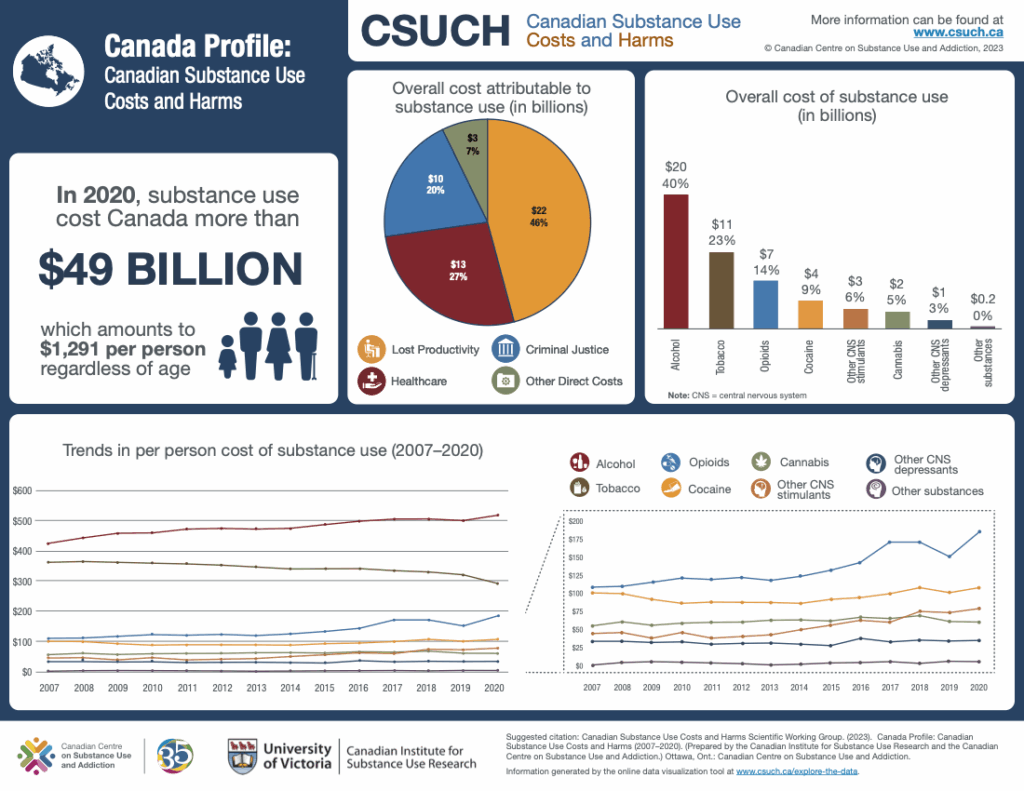
There is a misperception of the relative costs and harms of legal and illegal drugs. Our bodies do not know the legal status of a drug. Even though a drug is legal, it can be harmful. Many people think that the costs and harms of illegal substances exceed the costs and harms of legal substances. This is not the case and contributes to the discrimination and stigma faced by people who use illegal substances. In Canada, the drug with the greatest costs and harms is alcohol, followed by tobacco. Together they represent about 63% of the overall costs and harms of substances in Canada. There were nearly 74,000 deaths due to substance use in 2020, or nearly 200 deaths each day. Alcohol and tobacco accounted for over 85% of these deaths.
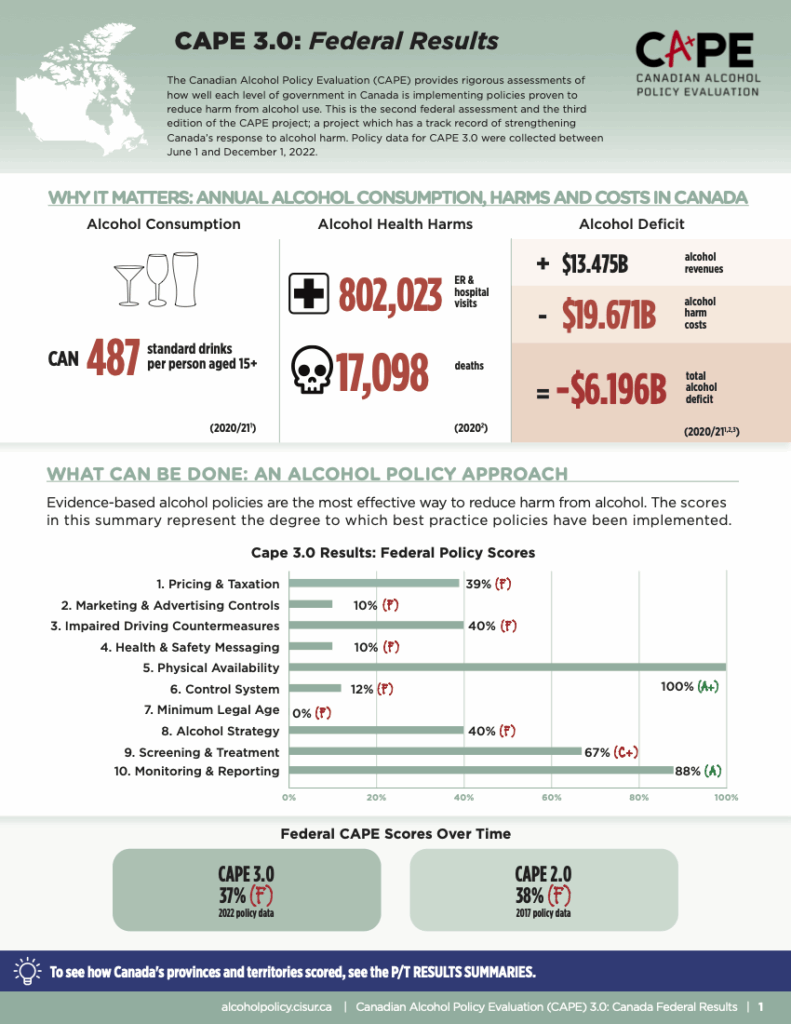
The Canadian Alcohol Policy Evaluation (CAPE) also provides information on the costs and harms of alcohol in Canada and rates the federal, provincial and territorial policies used to counteract these harms. This is the most recent federal summary.
Alcohol use has become normalized in our society even though it is the drug that causes the greatest harm to others. This is evident from the criminal justice costs in Canada of various substances, which show alcohol is responsible for about 40% of all criminal justice costs of substances.
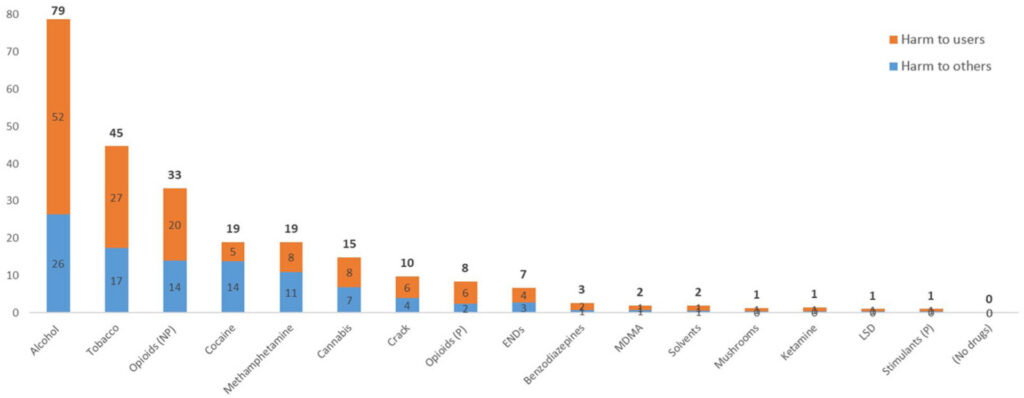
A 2026 study of the relative harms of 16 of the most commonly used drugs in Canada found that alcohol causes the most harm overall, followed by tobacco, nonprescription opioids, cocaine, methamphetamine and cannabis. That alcohol causes the greatest amount of harms is consistent with results of previous drug harm studies.
The Canadian Substance Use Costs and Harms Report (CSUCH 2020) shows that the cost of substance use in Canada from 2007 to 2020 increased by about 12% to $49 billion. While there was a 20% decline in the costs and harms of tobacco, there was a 21% increase in the costs and harms of alcohol.
North America is in the midst of a toxic drug crisis. It has never been more dangerous to use illegal drugs. People struggling with addiction and recreational users of the toxic unregulated drug supply are at risk of drug poisoning. People who are purchasing these drugs don’t know what they are getting. The data shows that opioids and stimulants had the greatest increase in costs since 2007. Opioids cost a record high of about $7 billion in 2020. Tragically, almost 75% of those costs resulted from lost productivity from people dying at a young age.
The NIDA website has information on drugs. They also have a detailed list of drugs and their effects.
Your donation helps us support families affected by addiction and those struggling with their substance use.
Please join us and sign up for our e-bulletins to get up-to-date information and to lend weight to our voice.