Home » Overdose and Naloxone
Everyone should know the signs of an opioid overdose. It is a sad truth that one of the most common mistakes that people make is that they assume someone is just sleeping off their drug use when in fact they are experiencing an overdose. Your loved one’s life can depend on you knowing the difference between sleeping and a potentially deadly overdose.
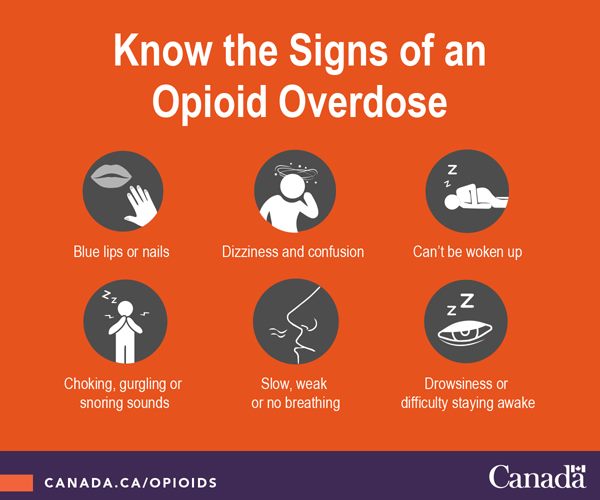
Everyone, especially those who use opioids (like oxycodone, morphine, fentanyl, methadone or heroin) or has a friend or family member who uses opioids, should have a naloxone kit (also known as a Narcan kit). Opioids depress (slow down) breathing. If someone uses too strong a dose of opioids at one time, or uses them with other depressant drugs like alcohol or benzodiazepines, they can overdose, lose consciousness, and stop breathing.
Naloxone saves lives by temporarily reversing an overdose. It strips opiates off the opioid receptors in the brain and restores breathing. It often needs to be administered more than once. This video explains how to recognize and respond to an opioid overdose with intramuscular (injectable) or nasal naloxone. If you are unsure if someone is experiencing an opioid overdose, administer naloxone anyways.
Always call 911. Sometimes people are afraid to call 911 because they think they will be charged with drug possession. Police departments are increasingly adopting policies to not respond in overdose situations unless there is an issue of safety. Further, Canada has passed the Good Samaritan Drug Overdose Act which applies to anyone seeking emergency support during an overdose situation. The Good Samaritan Law can protect persons from being charged for possession of a controlled substance and certain related offences in these situations.
You can find naloxone kits anywhere in Canada at this website. The availability of nasal naloxone across Canada can be found at this website.
In every overdose situation, if the unconscious person is still breathing, they should be put in the recovery position (on their side with a knee up to keep them on their side) to ensure they do not choke if they vomit. If you must leave the person, ensure they are in the recovery position.
Alcohol poisoning (an overdose of alcohol) affects breathing, heart rate, and body temperature and can be life threatening. While naloxone will not help for alcohol poisoning, if there is any chance the unconscious person has taken any drugs, knowingly or not, naloxone should be given. People experiencing alcohol poisoning require immediate medical attention. Call 911 if someone you know has blacked out from alcohol or has alcohol poisoning. Sometimes they will not wake up without treatment.
In every overdose situation, if the unconscious person is still breathing, they should be put in the recovery position (on their side with a knee up to keep them on their side) to ensure they do not choke if they vomit. If you must leave the person, ensure they are in the recovery position.
A stimulant overdose (overamping) is different from opioid and alcohol overdose because the person often does not lose consciousness. Signs include dangerous overheating, rapid breathing and heart rate, high blood pressure, chest pain, nausea, anxiety, irritability, hallucinations and psychosis. Consult the CDC Stimulant Guide on how to respond to a stimulant overdose and when to call 911.
In every overdose situation, if the person is unconscious and still breathing, they should be put in the recovery position (on their side with a knee up to keep them on their side) to ensure they do not choke if they vomit. If you must leave the person, ensure they are in the recovery position.
Your donation helps us support families affected by addiction and those struggling with their substance use.
Please join us and sign up for our e-bulletins to get up-to-date information and to lend weight to our voice.